
Landfill Expansion Rationale
There are several reasons that the Town wants to expand the landfill, the most important is that the landfill is a valuable resource and revenue source. The Landfill provides funding for a host of municipal services that would otherwise have to be paid for by taxpayer funds.
Unlike many municipal services, the Manchester Landfill operates as an enterprise fund. That means:
- It is financially self-supporting. Landfill customers pay to dispose of their wastes into the landfill
- It receives no subsidy from local property taxes
- It helps reduce financial pressure on the Town’s General Fund
- It offsets costs that might otherwise be paid directly by taxpayers
- Revenues generated through landfill operations stay in Manchester
- Landfill revenues are used to fund necessary services for Manchester residents and taxpayers
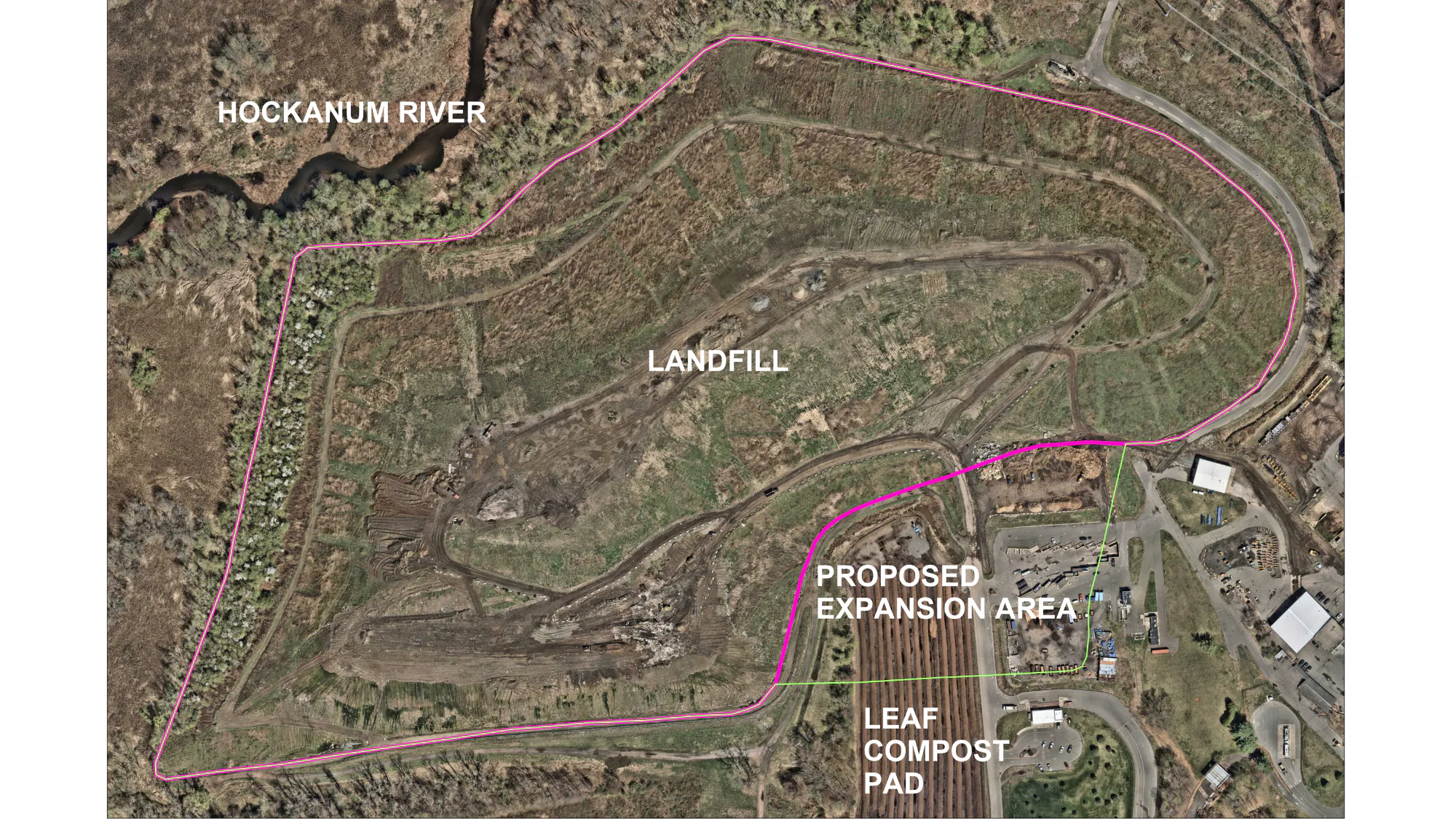
The Town is not seeking to create a new landfill on a new site. The proposed expansion area is adjacent to the existing landfill and has historically been used for waste management. The expansion area was used for sewage sludge drying beds from before 1934 through the early 1990s before being covered over and used for leaf composting for the past three decades.
The proposal will expand the footprint of the landfill by approximately six acres. At the same time, it will allow the Town to piggyback filling over another ten acres of existing landfill slopes and gain a total of about two million cubic yards of disposal capacity. This is expected to translate into 15 to 20 years of additional life expectancy and $150,000,000 to $200,000,000 in landfill revenues.
Landfill revenues cover the costs of services and projects that would otherwise have to be paid for directly by the taxpayers or cut back. These include, but are not limited to:
- Curbside collection of trash, recyclables, yard wastes, and bulk items for residents at a cost of $2,750,000 per year
- Disposal and management of trash and recyclables picked up at the curbside at a cost of over $1,800,000 per year
- Collection and disposal of trash and recyclables at Town buildings, parks, and fields at a cost of over $220,000 per year
- The fall leaf collection program and repairs, parts, and supplies needed for the leaf collection program at a cost of approximately $250,000 per year
- Reimbursement of trash and recyclable fees to condominiums at a cost of $170,000 per year
- Wood and yard waste grinding and asphalt and concrete crushing at a cost of $120,000 per year
- Food scrap collection at a cost of $60,000 per year
- Household hazardous waste collection events and disposal of these materials at a cost of approximately $60,000 per year
- Transfer station and leaf composting operations
- Neighborhood inspection and beautification efforts
- Spring and fall shredding events
- Sustainability initiatives
- Disposition of deceased animals collected in Town at a crematorium
- The majority of the diesel fuel used in all Town equipment and vehicles
- Special projects, such as the Olcott Street Sprayground
- Debris management after natural disasters, such as ice and tropical storms
- Future landfill capping at an estimated cost of over $24,000,000
- Post-closure monitoring and maintenance of the landfill for 30 years at an estimated cost of over $6,000,000
In addition, having the landfill continuing to operate allows the Town to dispose of materials in a permitted, local facility at no charge or at reduced rates without having to haul the materials out of town and pay market rates to dispose of them. These materials include:
- Over 2,500 tons of Town-generated construction and demolition debris and oversized MSW items, such as furniture, rugs, and fixtures
- Over 4,000 tons of Town-generated soil, street sweepings, catch basin cleanings, and asphalt, brick, and concrete each year
- Over 6,500 tons of sewage sludge from the Hockanum River Water Pollution Control Facility each year
The landfill is valuable resource to be managed for the residents of Manchester. The proposed horizontal expansion will preserve a self-sustaining community asset that generates revenue, protects taxpayers, supports valued municipal services, invests in parks and public infrastructure, and helps maintain the services and quality of life that Manchester residents enjoy.

Thank you for your contribution!
Help us reach out to more people in the community
Share this with family and friends